Recommended Tree Health Seasonal Tips
Explore Essential Tree Service Practices for Best Tree Maintenance
Understanding tree care is crucial for ensuring ecological wellness. Crucial methods including mulching and trimming play significant roles in promoting tree vitality. In addition, correct irrigation methods are critical for new root growth. Nonetheless, a lot of individuals ignore the indicators of tree illness and the need for expert assistance. Exploring these aspects can foster a greater respect for trees and their care. How can someone ensure to help their trees grow strong?
Grasping the Value of Healthy Trees
Recognizing the value of healthy trees is vital, as trees are instrumental in preserving the ecosystem's equilibrium and improving city settings. Strong trees assist with the quality of the air, provide shade, and support wildlife habitats. They also help mitigate global warming by absorbing CO2, which makes them vital for environmental sustainability.
In urban settings, well-maintained trees look better, boost real estate worth, and foster neighborhood health. Having trees can lessen the urban heat effect in cities, which saves money on energy.
Failing to care for trees, on the other hand, can result in disease, bug invasions, and unstable limbs, creating dangers to both the trees and surrounding infrastructure. As a result, identifying signs of a healthy tree, like the color of the leaves, its development rate, and bark condition, is vital for effective management. In conclusion, fostering healthy trees supports not only personal gardens but also the broader ecosystem, emphasizing the need for proactive care and care methods.
Essential Pruning Techniques
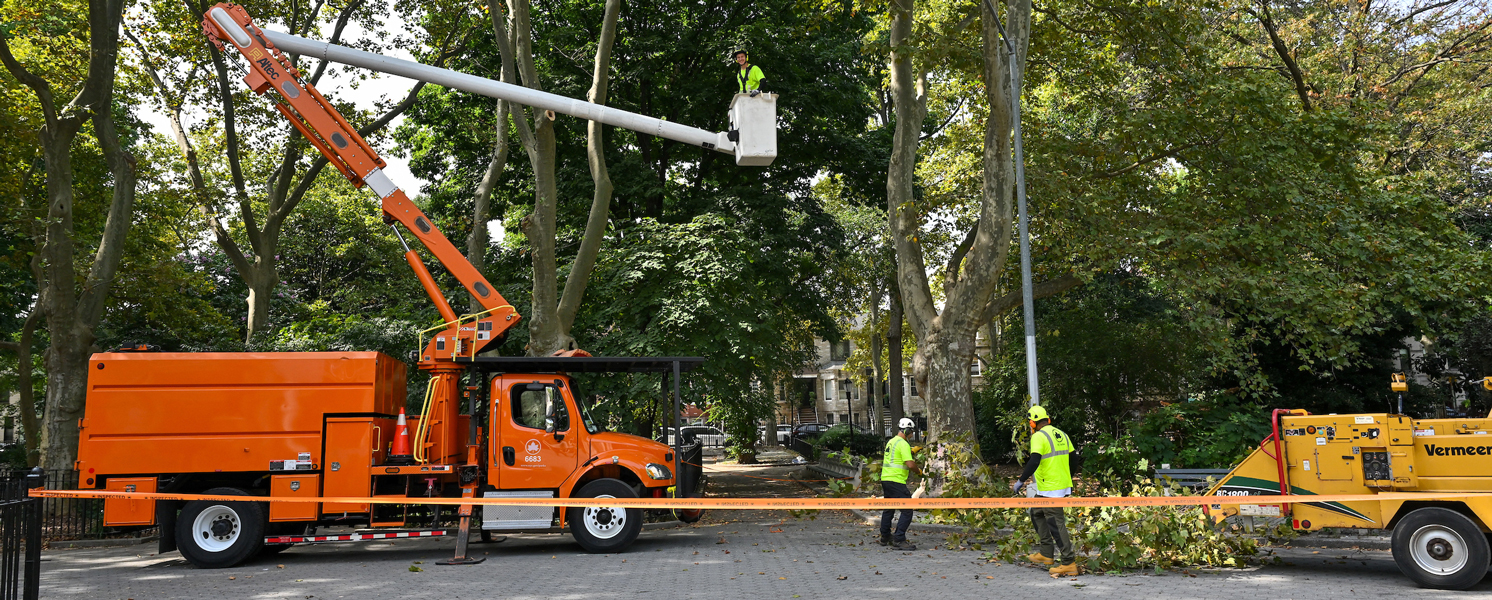
Trimming is a key technique in tree care that ensures optimal development and well-being, as it gets rid of sick or dead limbs and enhances air flow within the canopy. Using the right methods makes certain that trees can grow well in their setting.
An essential practice is "thinning," which involves selectively removing branches to allow more light through and reduce weight on weaker limbs. 'Tip pruning' is a different technique, where the ends of branches are snipped to promote bushier growth, mainly in juvenile trees. Additionally, the 'crown reduction' method decreases the size and reach of a tree and retaining its natural structure.
When to prune is key; trimming when the tree is resting lessens the impact and optimizes healing. Tools should be sharp and clean to prevent injury and infection transfer. Knowing these essential trimming methods is necessary for all tree specialists who seeks to keep healthy and visually appealing trees.
Recognizing Typical Tree Ailments
How do tree owners identify the signs of common diseases that endanger their trees? Knowing the particular signs is vital for quick spotting and action. Typical signs involve foliage that is off-color or limp, possibly indicating a fungus or nutrient deficiencies. Abnormal formations, like cankers or galls, can signal the presence of pests or related information diseases that harm the tree's vitality. Additionally, peeling bark or oozing sap can be a sign of disease that require immediate attention.
Tree owners should also observe changes in tree structure, such as branches dying or leaves falling, which might indicate a serious problem beneath the surface. Looking out for insect attacks, such as holes in the bark or frass, is just as critical. Through vigilance and promptness, tree owners can identify these common diseases and get the right solutions, to keep their trees healthy and vigorous throughout the seasons.
The Role of Mulching in Tree Care
Mulching serves as an important practice in tree care, providing many advantages which encourage strong development and durability. This technique requires placing a covering of inorganic or organic matter around the base of a tree, which helps retain soil moisture, preventing weed growth, and regulate soil temperature. This protective barrier doesn't just limit rivalry from unwanted vegetation but also boosts the visual appeal of the yard.
Furthermore, natural mulching materials, like bark or wood chips, gradually decompose, adding vital nutrients to the soil and enhancing the soil's composition. This ongoing process supports root development and promotes a better habitat for the tree. In addition, applying mulch helps stop the erosion of soil, which helps maintain the stability of the tree’s base. Appropriately spread mulch must be distributed in a ring shape, making sure it doesn't touch with the trunk to stop decay. Overall, incorporating mulching into tree care routines considerably contributes to the lasting vitality of trees.
Effective Watering Techniques for Trees
Quality tree upkeep needs not only mulching but also appropriate watering techniques to ensure optimal growth and health. Tree specimens, specifically new plantings, require steady hydration to establish strong root systems. Deep hydration is crucial, as it encourages roots to grow downwards where moisture is more consistent. Ideally, trees should receive about an inch of water per week, be it from precipitation or supplemental irrigation.
It is best to water at dawn to cut down on evaporation and fungal diseases. One must be careful not to overwatering, which often causes root decay and related complications. Check the ground for moisture before watering; if the top two inches are dry, it’s time to water. Furthermore, using a soaker hose or drip irrigation can provide a slow, steady supply of water, making sure trees get enough water without the danger of water runoff. Effective hydration techniques significantly aid to the general well-being of trees.
Hiring Professional Tree Services: When and Why
In evaluating the health and aesthetics of a property, retaining specialized arborists is often vital for homeowners facing complex tree care needs. Professional arborists possess the expertise to evaluate the condition of trees, identify diseases, and implement effective treatments. Arborists are also aware of local regulations concerning tree removal and maintenance, making sure they comply and sidestepping fines
(Stillwater Tree Service)It is wise for homeowners to engage professionals when dealing with mature trees, especially those close to buildings or power lines, as incorrect care can lead to dangers. In addition, trees requiring pruning for aesthetic or health reasons benefit from the skills of trained specialists who can execute precise cuts to stimulate new growth
Routine seasonal work, such as storm preparation and clearing debris, also require expert help to ensure site security and appearance. As a result, engaging professional tree services ensures optimal tree maintenance, which benefits greatly the entire outdoor space and real estate worth
Commonly Asked Questions
What Are the Signs if My Tree Is Receiving Too Much Water?
Overwatering often leads to foliage turning yellow, drooping even when the ground is wet, decaying roots, and premature shedding of leaves. Furthermore, the development of mold or fungus at the tree's base may indicate inadequate water runoff and saturated soil.
What's the Optimal Season for Tree Pruning?
The optimal period to prune trees is typically late winter to early spring before the onset of new foliage - Stillwater Tree Service. Pruning at this time encourages healthy growth and minimizes stress on the tree, facilitating quick recovery and development
Is It Possible for Trees to Survive Major Storm Damage?

Absolutely, trees are capable of recovering from major storm damage. If maintained correctly, like trimming broken branches and providing adequate water and nutrients, a lot of trees can become healthy again and flourish once more after experiencing significant stress.
What Should I Look For When Choosing the Right Mulch for My Trees?
To choose the right mulch for trees, one should consider organic materials such as shredded bark or wood chips, ensure a layer 2 to 4 inches deep, and keep mulch away from the tree collar to safeguard against rot.
Are Some Trees Higher Maintenance Than Others?
Certain trees, for instance, new plantings and orchard trees, require greater attention due to their sensitivity to environmental changes and unique feeding requirements. Frequent checking and specific upkeep methods are crucial for their well-being and growth.